
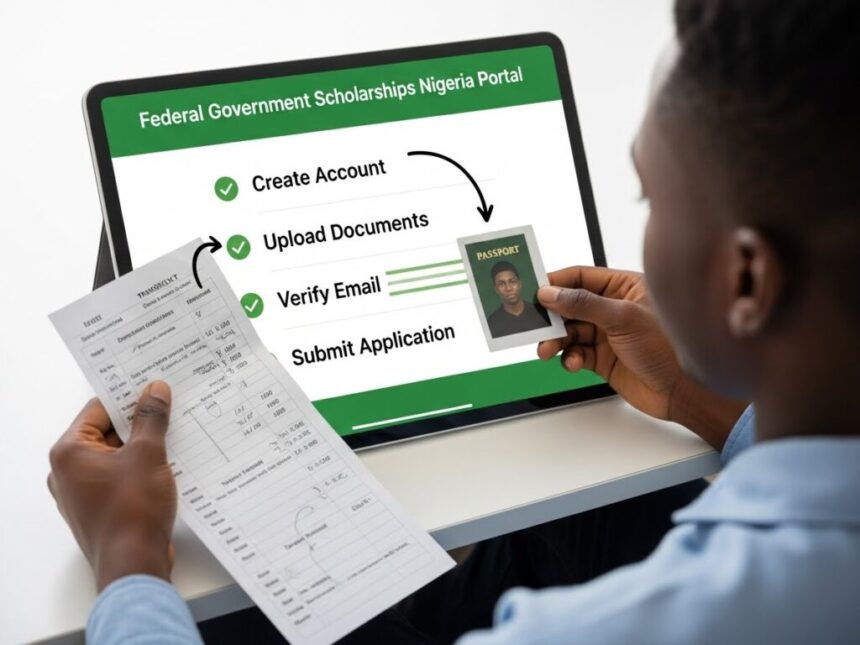
The Federal Government of Nigeria, through the Federal Ministry of Education and the Federal Scholarship Board (FSB), continues to offer valuable scholarship opportunities to support talented Nigerian students in pursuing higher education. In 2025, these initiatives focused on both domestic awards for studies in Nigerian public institutions and limited international programs under bilateral agreements, although significant changes occurred during the year.
The primary domestic scholarships include the Nigerian Scholarship Award (NSA) and Education Bursary Award (EBA), which provide financial assistance to undergraduates, postgraduates, HND, and NCE students in public tertiary institutions. Internationally, the Bilateral Education Agreement (BEA) scholarships enabled studies abroad in countries like Russia, China, Hungary, Morocco, Egypt, Algeria, and others, but the program faced major reforms. In April 2025, the government announced the scrapping of new BEA awards, citing inefficiency and a desire to redirect funds toward local education support.
This shift emphasized strengthening domestic scholarships to benefit more students nationwide. These programs aim to promote academic excellence, reduce financial barriers, and develop skilled manpower for Nigeria’s growth. Eligible applicants typically undergo computer-based tests (CBT), interviews, and document verification. With applications often handled online via official portals, students are encouraged to apply early and verify information from trusted sources like the Federal Ministry of Education website.
Key Federal Government Scholarships Available in 2025
1. Nigerian Scholarship Award (NSA) and Education Bursary Award (EBA)
The NSA and EBA represent core domestic scholarships administered by the FSB for Nigerian students in public universities, polytechnics, and colleges of education. These awards target full-time students demonstrating strong academic performance and financial need. For undergraduates, applicants must have at least a Second Class Upper Division or equivalent CGPA in their previous academic level, while postgraduates require relevant qualifications such as a First Degree with Second Class Upper. HND and NCE candidates also qualify under specific criteria.
The scholarship provides annual stipends: ₦300,000 for undergraduates (covering National Award and Education Bursary), ₦450,000 for postgraduates, and ₦150,000 each for HND and NCE students. This funding helps cover tuition, books, accommodation, and living expenses, easing the burden on families amid economic challenges. Applications in 2025 typically opened early in the year, with deadlines around May (for example, May 29 in related cycles), requiring online registration, upload of credentials like academic transcripts, birth certificates, indigene letters, and NYSC documents where applicable. Successful candidates proceed to CBT screening and interviews. These scholarships prioritize equity, often reserving slots for underrepresented regions and disciplines critical to national development, such as STEM fields.
2. Bilateral Education Agreement (BEA) Scholarships
Prior to its discontinuation for new awards, the BEA program was a flagship federal initiative offering fully funded opportunities for Nigerians to study abroad. Undergraduate slots targeted countries like Russia, Morocco, Hungary, Egypt, and Algeria, while postgraduate studies (especially for those with prior Russian degrees) extended to China, Hungary, Serbia, Romania, and others. The scholarship covered tuition fees, accommodation, health insurance, stipends, and travel allowances, making it highly competitive and attractive for students seeking international exposure. Eligibility for undergraduates included at least seven distinctions (As and Bs) in WASSCE/WAEC subjects relevant to the course, including English and Mathematics.
Postgraduates needed a Second Class Upper First Degree. Additional requirements encompassed medical fitness certificates, police clearance (where needed), and age limits in some cases. Applications involved online submission via the FSB portal, with deadlines often in January (e.g., January 12 for 2025/2026 cycles). However, in April 2025, the Federal Government terminated new BEA awards, describing it as a “waste of resources” due to high costs (e.g., N9 billion planned for limited slots) compared to local alternatives. Existing beneficiaries from prior years continued receiving support up to committed budgets, with assurances that no valid awardee was abandoned despite occasional payment delays from fiscal constraints. This policy change redirected resources to expand domestic opportunities.
Other Related Federal and Multilateral Opportunities
In addition to core FSB programs, Nigerian students accessed multilateral scholarships in 2025, such as the Commonwealth Scholarship and Fellowship Plan (CSFP). Coordinated through the FSB, this offered Masters and PhD funding for studies in the UK, targeting least-developed countries and vulnerable states. Applications opened in September 2025 for the 2026/2027 cycle, with deadlines in October, and required direct submissions via Commonwealth portals alongside FSB nomination. These awards emphasize leadership, research impact, and development contributions. While not exclusively federal, the government’s endorsement and nomination process make them accessible to Nigerians. Students should monitor the Ministry’s site for updates on similar partnerships.
Applying for these scholarships demands preparation, including strong academic records, accurate documentation, and awareness of deadlines. Official channels like education.gov.ng and fsbn.com.ng remain the most reliable for announcements, avoiding scams that promise shortcuts for fees.
FAQs
What are the main federal scholarships available for Nigerian students in 2025?
The primary ones include the Nigerian Scholarship Award (NSA), Education Bursary Award (EBA) for domestic studies, and previously the Bilateral Education Agreement (BEA) for abroad, though BEA new awards were discontinued in 2025.
Who is eligible for the NSA and EBA scholarships?
Full-time students in Nigerian public tertiary institutions with strong academic performance (e.g., Second Class Upper or equivalent), Nigerian citizenship, and necessary documents like transcripts and indigene letters qualify.
How much funding do domestic federal scholarships provide?
Undergraduates receive ₦300,000 annually, postgraduates ₦450,000, while HND and NCE students get ₦150,000 each to support tuition and living costs.
Why was the BEA scholarship program scrapped in 2025?
The government cited inefficiency, high costs per student, and the availability of similar courses locally, opting to redirect funds to benefit more students through domestic programs.
Did existing BEA scholars continue receiving support after the discontinuation?
Yes, beneficiaries enrolled before 2024/2025 received payments up to committed budgets, with the government clarifying no valid awardee was abandoned.
How do I apply for federal scholarships in Nigeria?
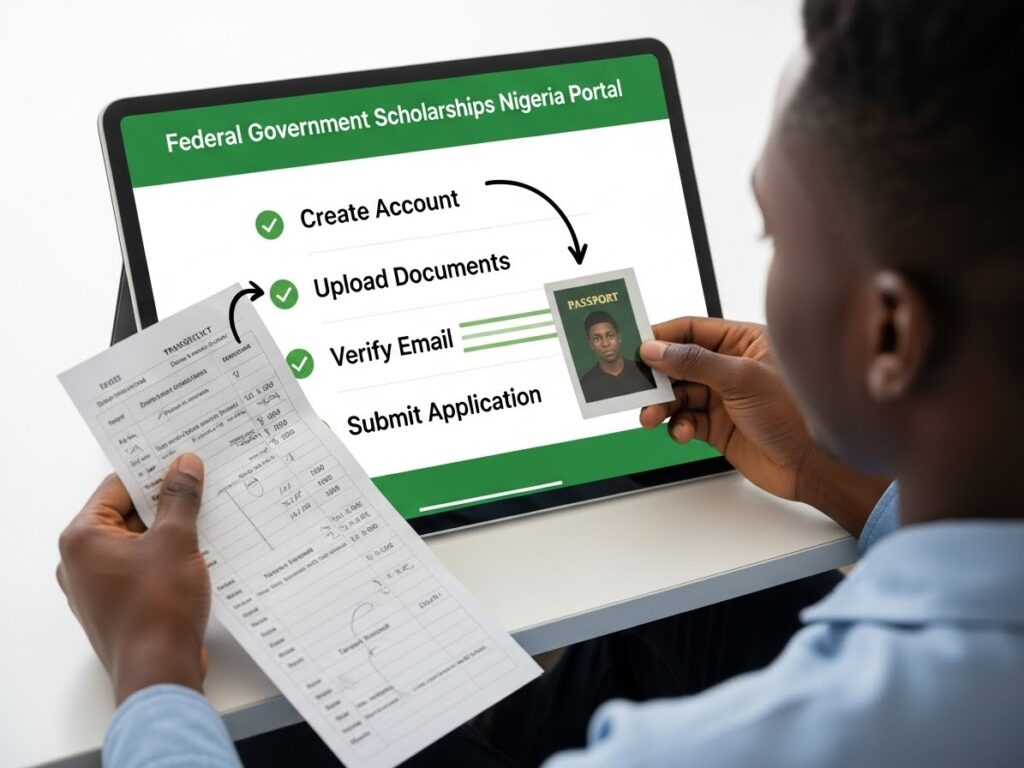
Visit official portals like education.gov.ng or fsbn.com.ng, register online, upload required documents, and follow screening stages like CBT and interviews.
What documents are typically required for FSB scholarships?
Common items include birth certificate, indigene letter, academic transcripts, WASSCE results, NYSC discharge/exemption (for postgraduates), and passport photographs.
Are there age limits for these scholarships?
Undergraduate and HND/NCE often have no strict age limits, but postgraduate awards may cap at 35 for Masters and 40 for PhD in related multilateral programs.
Can polytechnic and college of education students apply?
Yes, HND and NCE students in public institutions are eligible under the EBA and related awards.
What happens after submitting an application?
Shortlisted candidates undergo CBT exams, followed by interviews, verification, and award announcements via official channels.
Are federal scholarships free to apply for?
Yes, applications are free; beware of scams demanding payment. Use only verified government websites.
Where can I get the latest updates on 2025 scholarships?
Check the Federal Ministry of Education website (education.gov.ng), FSB portal, or official social media like @NigEducation on X for authentic information.